When we care for a patient at home, we are performing a task filled with great responsibility and service. Our job is not just to fulfill the patient’s daily needs but also to protect a vulnerable human being from both visible and invisible threats. Dealing with visible threats is relatively easy, but avoiding invisible dangers requires a caregiver to act with intelligence and responsibility. Infection is one of those hidden dangers. It is a threat that often arrives without clear symptoms, and even a small oversight in the home environment can turn into a major complication.
Effective infection control is not the name of complex medical principles; rather, it is a collection of simple and consistent habits that keep both the patient and the caregiver safe. In this guide, we will discuss what these habits are and what a caregiver needs to do to adopt them.
Some 3.85 billion people around the world rely on health care facilities that lack basic hygiene services needed to prevent and control the spread of disease, increasing the risk of infection, according to a report from UNICEF and the World Health Organization.
Infection Control and Hygiene: Why They Matter
One thing we must keep in mind is that the most significant factor in the spread of infection is the lack of proper hygiene. In hospitals and care facilities, high standards of cleanliness are maintained to prevent the risk of infection or its transmission from one patient to another.
It is important to understand that infection prevention is not limited to hospitals. Infections often spread in homes because daily hygiene principles are overlooked. This does not mean turning the home into a sterile hospital environment but rather reducing unnecessary risks and breaking the chain of infection transmission.
When we ensure proper hygiene, our goal is to achieve the following benefits:
- Preventing the spread of bacteria and viruses.
- Protecting patients with weak immune systems.
- Reducing complications during the recovery process.
- Keeping the home environment safe and clean.
By adopting basic hygiene principles, we establish a safe and comfortable caregiving environment.
Common Risks of Infection in Home Care
In the home, infections generally spread through hands, surfaces, shared items, and close contact. As caregivers, we perform many tasks—from preparing food for the patient to fixing the bed, assisting in the bathroom, and managing medications. Often, we don’t realize that germs travel through these very paths. Since we understand that infection is a hidden danger, it is vital to know how it spreads to better avoid it. The following factors can cause the spread of infection:
- Improper waste disposal
- Unclean hands
- Contaminated surfaces
- Sharing personal items
- Poor wound care
Essential Hygiene Habits for Caregivers
As mentioned earlier, infection control at home is not about achieving perfection; it is about awareness, routine, and care. Remember, a medical degree is not required to protect someone from a treatable infection. Clean hands, a clean environment, safe procedures, and informed observation are the fundamental pillars. As caregivers, we can reduce the risk of infection by adopting these basic hygiene habits:
1. Wash Hands Regularly – The First Line of Defense
We generally know that clean hands are the first and most effective shield against infection. The Centers for Disease Control and Prevention (CDC) explains that proper handwashing with soap and water removes many harmful germs and helps stop the spread of illness. For caregivers, this simple habit plays a critical role in protecting vulnerable individuals. Specifically, the habit of washing hands after bathroom assistance, before serving food, after handling waste, and after general cleaning can prevent many common infections. Although handwashing may seem basic, it is often skipped during busy caregiving routines. However, giving those few extra seconds is far more important to protect your loved ones from infection complications.
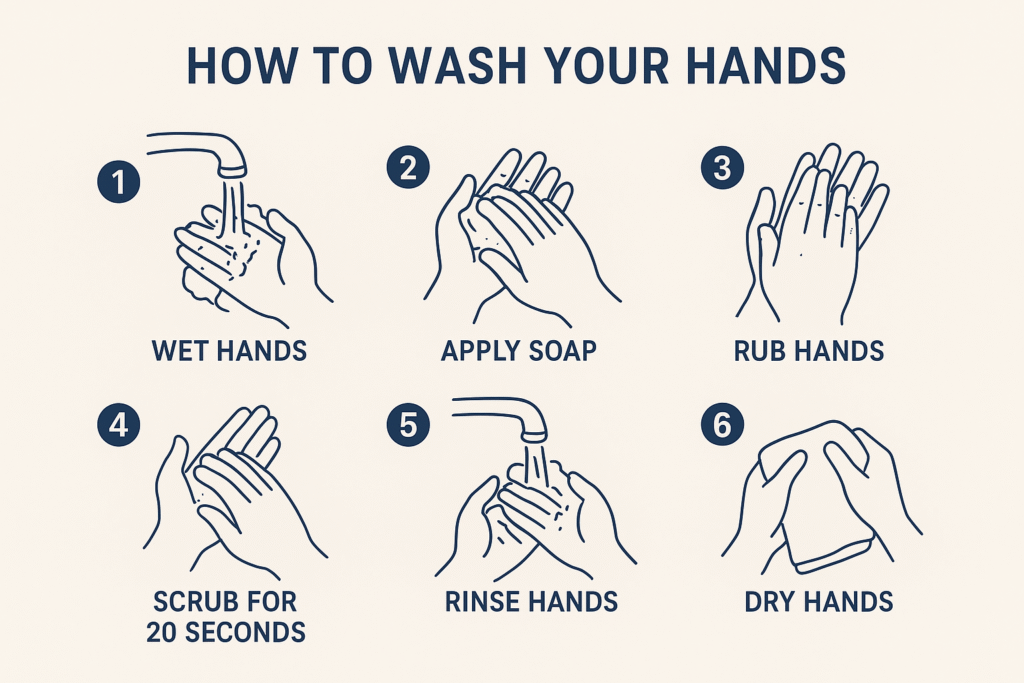
How to wash hands correctly?
- Wet hands with clean water.
- Apply soap.
- Rub thoroughly for at least 20 seconds.
- Clean between fingers and under the nails.
- Rinse well with water.
- Dry with a clean towel or tissue.
(Source: CDC – Clean Hands Save Lives)
If soap and water are unavailable at any point, hand sanitizer can be helpful, but it is not a substitute for soap when hands are visibly dirty.
2. Keep Nails Short and Clean
While caring for a patient, it is necessary for caregivers to maintain their own hygiene alongside the patient’s. Germs can accumulate in long nails—whether they belong to the patient or the caregiver—and spread infection very easily. Therefore, caregivers should keep their own and the patient’s nails short and clean. Avoid wearing artificial nails.
3. Use Gloves When Necessary
Disposable gloves provide protection to both the patient and the caregiver. Personal protective habits are not just for hospitals; they are equally important during home care. Gloves are useful when handling bodily fluids, caring for wounds, assisting the patient in the bathroom, or managing waste. However, remember that merely wearing gloves does not guarantee safety. If we perform cleaning tasks with gloves and then touch everything else with those same gloves, the purpose is defeated.
Wash your hands before and after wearing gloves and dispose of them safely once the task is complete. After cleaning bodily fluids or the surroundings, discard the used gloves and use a new pair—after washing hands—for wound care or dressing.
4. Use a Mask When Needed
If the patient has a respiratory illness or the caregiver is unwell, a mask can be beneficial. These small barriers reduce the risk of direct germ transmission, especially during close contact.
5. Ensure Cleaning of Contaminated Surfaces
In home care, the cleanliness of surfaces plays a quiet but vital role. Frequently touched surfaces can become contaminated with germs. Bed rails, side tables, door handles, switches, and other items touched repeatedly can accumulate germs throughout the day. If these surfaces are not properly cleaned, they can cause infection to spread. Regular cleaning and then disinfecting them with a safe household disinfectant reduces the risk.
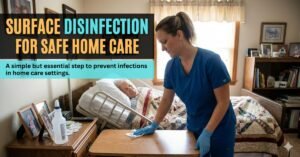
Disinfecting surfaces does not require harsh chemicals or constant scrubbing. We should clean surfaces consistently, as consistency is more important than intensity. Remember, simple daily cleaning is more beneficial than occasional deep cleaning. Further guidance can be found in our guide, “Surface Disinfection in Home Patient Care”
6. Exercise Caution in Sharing Personal Items
One important point we often overlook is that the sharing of personal items between the patient and other family members is a major source of infection spread. As a caregiver, we must ensure that the patient’s items—such as towels, combs, toothbrushes, soap, and even beddings are separate. Sharing these items provides an easy path for germs to move from one person to another. Specifically, items that come into direct contact with skin or bodily fluids should never be used by others.
Designate a specific place or tray for these items so they do not mix with general household things. This small precaution plays a key role in protecting other family members, especially children and the older adults.
7. Ensure Cleanliness of Items Used by the Patient
To stop the spread of infection, separate and regular cleaning of the patient’s utensils, bedsheets, and clothes is indispensable. Use hot water and good dishwashing soap to wash the patient’s utensils; if possible, dedicate a separate sponge or cloth for them.
Similarly, use gloves when handling the patient’s worn clothes and bed sheets, and try to wash them separately from the rest of the family’s laundry. Using hot water and disinfectant detergent helps eliminate germs. After washing, drying clothes in bright sunlight or on a high-heat dryer setting is also an excellent precaution to ensure no moisture remains for germs to regrow.
8. Pay Attention to Wound Care
Now we come to a critical point: proper care of the patient’s wounds. During home care, the first rule of infection prevention in wound care is strict adherence to hygiene. Guidance from clinical care resources, such as the National Center for Biotechnology Information (NCBI), highlights that maintaining proper hand hygiene and clean dressing practices is essential to reduce infection risk during wound care. The caregiver should wash their hands with soap and water for at least 20 seconds before and after touching a wound, changing a dressing, or applying ointment.
Always use disposable gloves during the dressing process and dispose of them safely immediately after use. Take special care to keep the area around the wound dry and clean and use only sterile bandages and cotton for dressing. If a bandage becomes wet or shows blood or discharge, it should be changed immediately to prevent germs from thriving.
This cleaning process not only provides comfort to the patient but also helps keep the home environment germ-free.
9. Dispose of Contaminated Items and Waste Properly
During home care, we constantly encounter contaminated items used by the patient. To prevent infection spread, the correct transfer and disposal of waste are vital. Ensure that the patient’s used masks, gloves, bandages, or soiled tissues are not left open with general waste; instead, collect them in a separate and sturdy plastic bag.
If the waste contains items soiled with blood or other fluids, use the “double bagging” method (placing one bag inside another) to prevent the risk of leakage. For needles or other sharp objects, use a hard, puncture-proof container (like an empty plastic bottle) to prevent injury to waste handlers. The waste bin should always have a lid, and hands must be washed thoroughly with soap immediately after emptying or touching it. Properly dispose of waste contaminated with bodily fluids immediately. Always wear gloves and, if necessary, a mask while disposing of waste. A clean and organized environment gives germs fewer places to hide.
Taking Care of the Patient’s Personal Hygiene
Personal hygiene is essential for the patient’s comfort, dignity, and health. Certain patients are at a higher risk of infection, such as those who are bedbound, recovering from surgery, the older people, or people with weak immune systems. Cleaning the skin, maintaining oral hygiene, and keeping the body clean and dry prevents many common infections.
The caregiver should establish a regular daily schedule for washing the patient’s hands and face, cleaning their teeth, and overall body hygiene. If the patient is unable to bathe themselves, a ‘sponge bath’ is an excellent alternative, using lukewarm water and a soft cloth to clean the body. During this process, focus particularly on cleaning and drying areas where sweat accumulates or where moisture might gather, as moisture promotes germ growth. A detailed method for this can be found in our guide, “How to Give a Bed Bath”
Additionally, keeping the patient’s nails trimmed and hair clean reduces germ spread. This act of cleanliness not only keeps the patient physically refreshed but also enhances their psychological health and self-confidence, which aids in recovery.
Ensure the following points for the patient’s personal hygiene:
- Oral Hygiene: Brush at least twice a day or ensure the gums and tongue are cleaned with a soft cloth to prevent mouth infections or sores.
- Keep Skin Dry: After a bath or sponge bath, dry the body thoroughly, especially joints and skin folds, to avoid fungal infections.
- Pillowcases: Change the patient’s pillowcase regularly, as germs are most frequently transferred there through breath and the face.
- Air Circulation: If possible, open windows for some time during the day to allow fresh air in and let contaminated air out of the room.
- Hand Sanitizer: Keep a hand sanitizer near the patient’s bed for quick use when immediate hand washing is not possible.
Why Caregivers Must Care for Their Own Health?
Caring for a patient at home is a continuous and sometimes exhausting process. Although it is difficult for a caregiver to find time for their own health and hygiene during this process, it is extremely necessary. A caregiver taking care of their own rest and hygiene protects not only themselves but the patient as well from many infections.
Additionally, a useful habit for a caregiver is observation. If the caregiver notices change in the patient early—such as a mild fever, unusual fatigue, redness around a wound, a new cough, or a change in behavior, they can take timely action. Infection often starts silently. Early attention, sometimes just through better hygiene and monitoring, can prevent complications. This is only possible when the caregiver attends to their own health and remains mentally and physically healthy enough to make timely decisions and act upon them.
Conclusion
Caring for someone at home is an act of love and sacrifice, but prioritizing infection control during this process is indispensable for the patient’s swift recovery and the safety of other family members. Remember that the greatest shield against germs is not an expensive medicine, but your clean hands, an organized environment, and timely observation. When you make personal hygiene, proper waste disposal, and small protective habits as a part of your routine, you are effectively breaking the chain of infection. This consistency and caution are the foundation of a safe and healthy caregiving environment, making this difficult journey easier for both the patient and the caregiver. This is the true purpose of home care.
Disclaimer: The information provided in this guide is for educational and informational purposes only and does not constitute professional medical advice. Always seek the advice of a qualified healthcare provider regarding a medical condition.